The Role of Real-Time Data in Predictive Operations

Manufacturing operations rarely fail all at once.

They drift.

A bearing begins running slightly hotter than expected.
A rotary die starts cutting just outside tolerance.
A packaging line slowly loses throughput.

At first the signal looks small.

But in modern industrial environments, small signals rarely stay small for long.

Manufacturing systems today are tightly interconnected across machines, material flows, supplier networks, and digital control systems. A minor deviation in one part of the process can quickly cascade across production lines, downstream logistics, and maintenance schedules.

And the financial impact of those cascades is significant.

According to research from the Siemens “True Cost of Downtime” study, unplanned downtime now costs large industrial manufacturers between $260,000 and $2 million per hour depending on the industry. Automotive manufacturing in particular has been estimated to lose more than $2 million per hour of downtime when production lines stop unexpectedly.

The signals that lead to these failures almost always exist before the disruption occurs.

The challenge isn’t collecting the data.

It’s seeing the signal early enough—and understanding it in operational context.

The Limits of Traditional Operational Visibility

Over the last decade, manufacturers have invested heavily in digital infrastructure.

Modern factories generate enormous volumes of operational data through systems like:

  • MES platforms tracking production states and throughput
  • SCADA systems monitoring equipment behavior and control loops
  • IoT sensors streaming telemetry from machines and environmental systems
  • ERP platforms coordinating supply chains, scheduling, and materials

In theory, this should provide unprecedented visibility into factory operations.

In practice, it often produces the opposite.

Operational data is fragmented across dozens of systems—each optimized for a specific function but rarely designed to work together in real time.

Production dashboards show throughput.
Maintenance systems track component health.
Analytics tools surface historical trends.

But when something starts going wrong on the production floor, teams often have to reconstruct the operational story manually.

This fragmentation is a well-documented issue. In a 2021 report on digital manufacturing, McKinsey noted that many industrial organizations struggle with “data silos that prevent operational teams from building a unified view of production systems.”

And while teams are trying to reconcile those signals, the line continues running.

Or worse—it stops.

When Operational Coordination Breaks Down

In 2022, Toyota experienced a real-world example of how fragile modern production coordination can be.

A failure in a supplier’s production management database at Kojima Industries disrupted the flow of manufacturing instructions to Toyota’s assembly plants.

Because Toyota operates under a tightly optimized just-in-time manufacturing model, even a short disruption in digital coordination between supplier systems and factory operations forced the company to halt production.

The result:

14 manufacturing plants temporarily shut down
Approximately 13,000 vehicles not produced in a single day

The failure wasn’t mechanical.

It was operational.

The systems responsible for coordinating suppliers, production schedules, and manufacturing processes lost visibility into one another.

As Nikkei Asia reported at the time, once the coordination layer failed, Toyota had no way to quickly restore production synchronization across its plants.

Events like this highlight an important reality for modern manufacturing:

Operational resilience increasingly depends on how well digital systems coordinate production—not just how well machines perform individually.

Why Predictive Operations Require More Than Dashboards

Most factories today already have dashboards.

In many cases, they have too many.

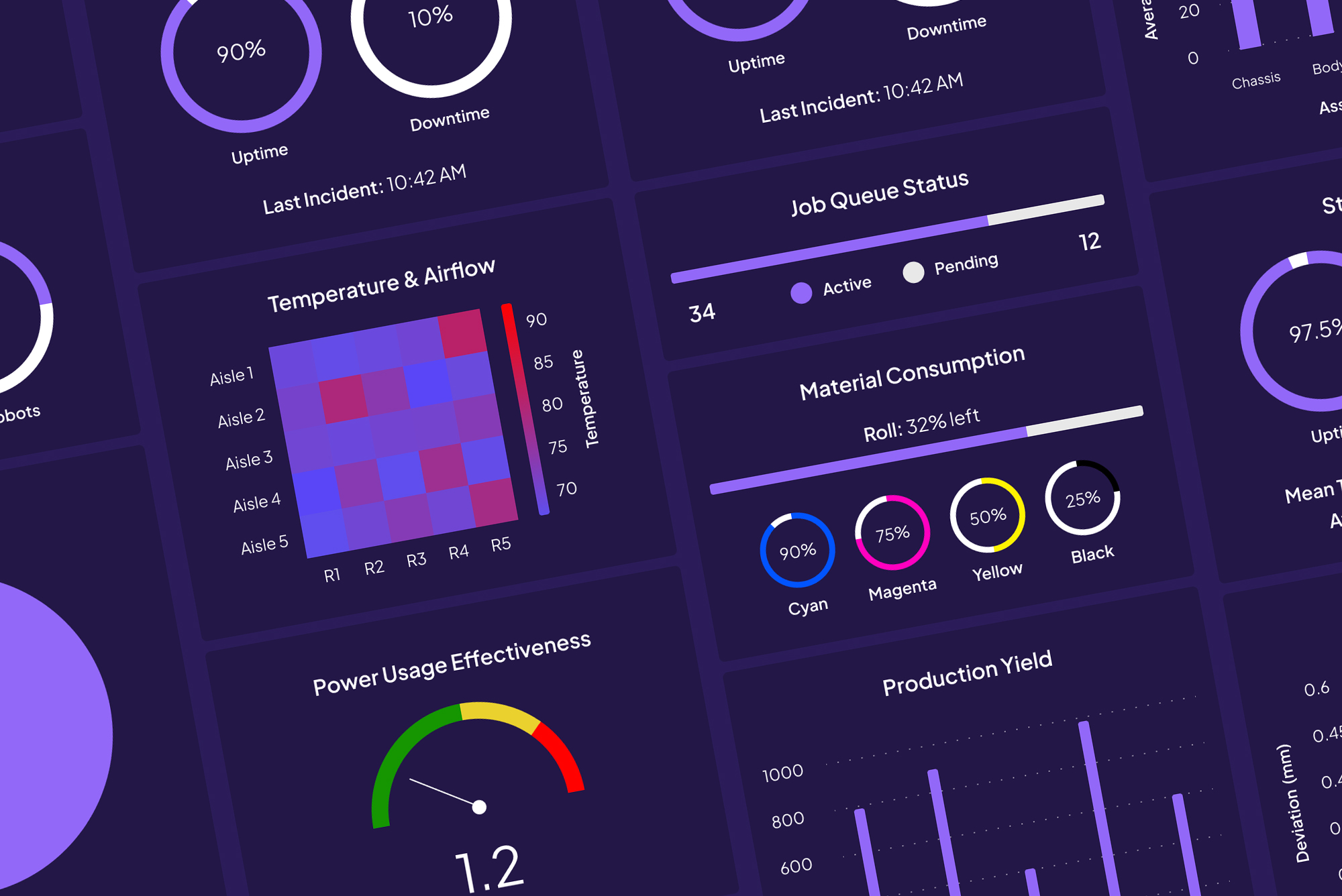
Dashboards are excellent at reporting metrics. They summarize machine performance, throughput, quality rates, and downtime events.

But dashboards rarely show how systems interact with one another in real time.

An engineer may see machine telemetry.
An operations manager sees production KPIs.
Maintenance teams track equipment lifecycle data.

But no one sees the entire operational system simultaneously.

This gap has become a common theme in industrial analytics research.

A Gartner report on Industrial IoT platforms noted that many manufacturers still rely on fragmented monitoring tools that “lack a unified operational context for decision-making.”

And that’s where predictive operations break down.

Preventing downtime isn’t just about monitoring equipment health.

It’s about understanding how equipment behavior affects the rest of the system.

Why Spatial Context Is Emerging in Industrial Operations

As industrial environments become more complex, many organizations are beginning to move beyond traditional dashboards toward spatial operational environments.

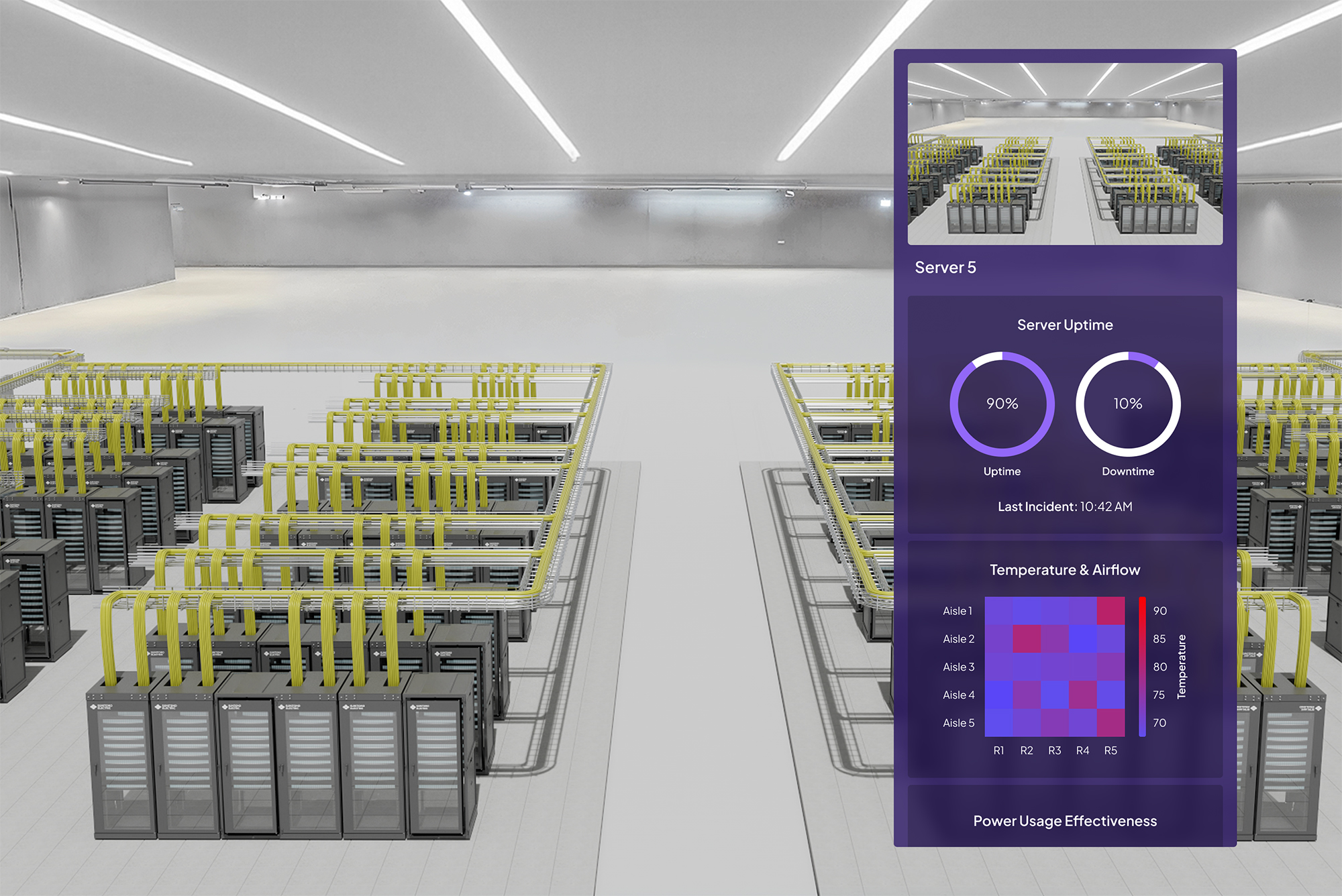
Instead of interpreting system relationships through charts and tables, engineers and operators can observe assets, telemetry streams, and production metrics interacting within a digital representation of the facility.

This approach aligns naturally with the concept of digital twins, which analysts at firms like Gartner and McKinsey increasingly identify as a key component of Industry 4.0 strategies.

In a recent McKinsey analysis of industrial digital twins, researchers noted that companies using digital twin environments for operations and maintenance achieved up to a 15% reduction in downtime and a 10–20% improvement in operational efficiency.

Inside these environments:

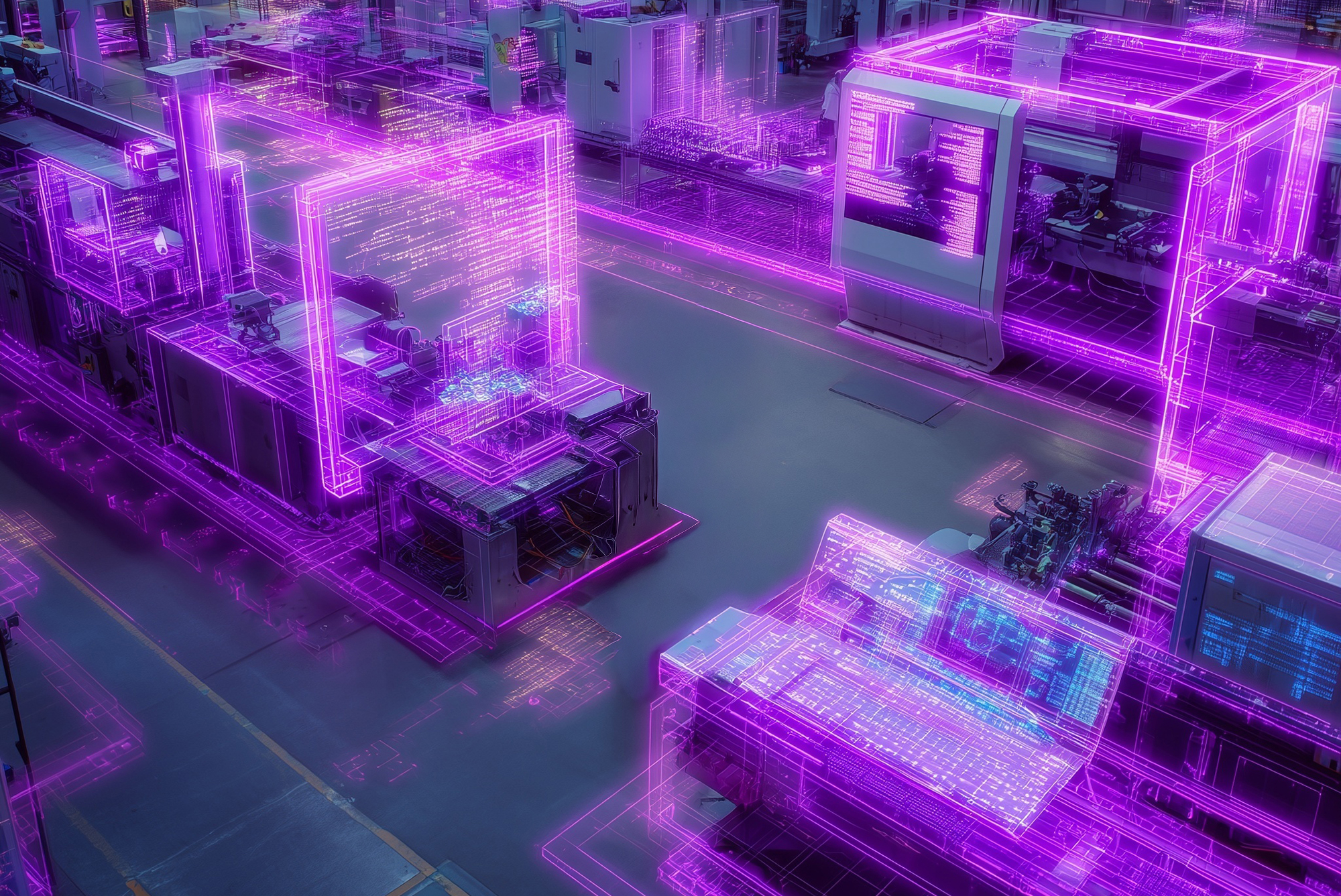
Machines, production lines, and facility infrastructure exist within a shared visual model of the operation.

Operational data is attached directly to the systems it represents.

When something changes, teams don’t just see a number update.

They see where the change is happening—and how it affects the system around it.

Connecting Real-Time Data to Operational Context

SurrealXP was designed to address this coordination problem.

Built on NVIDIA’s Omniverse platform, SurrealXP connects enterprise systems, real-time telemetry streams, and digital twin environments into a shared operational layer.

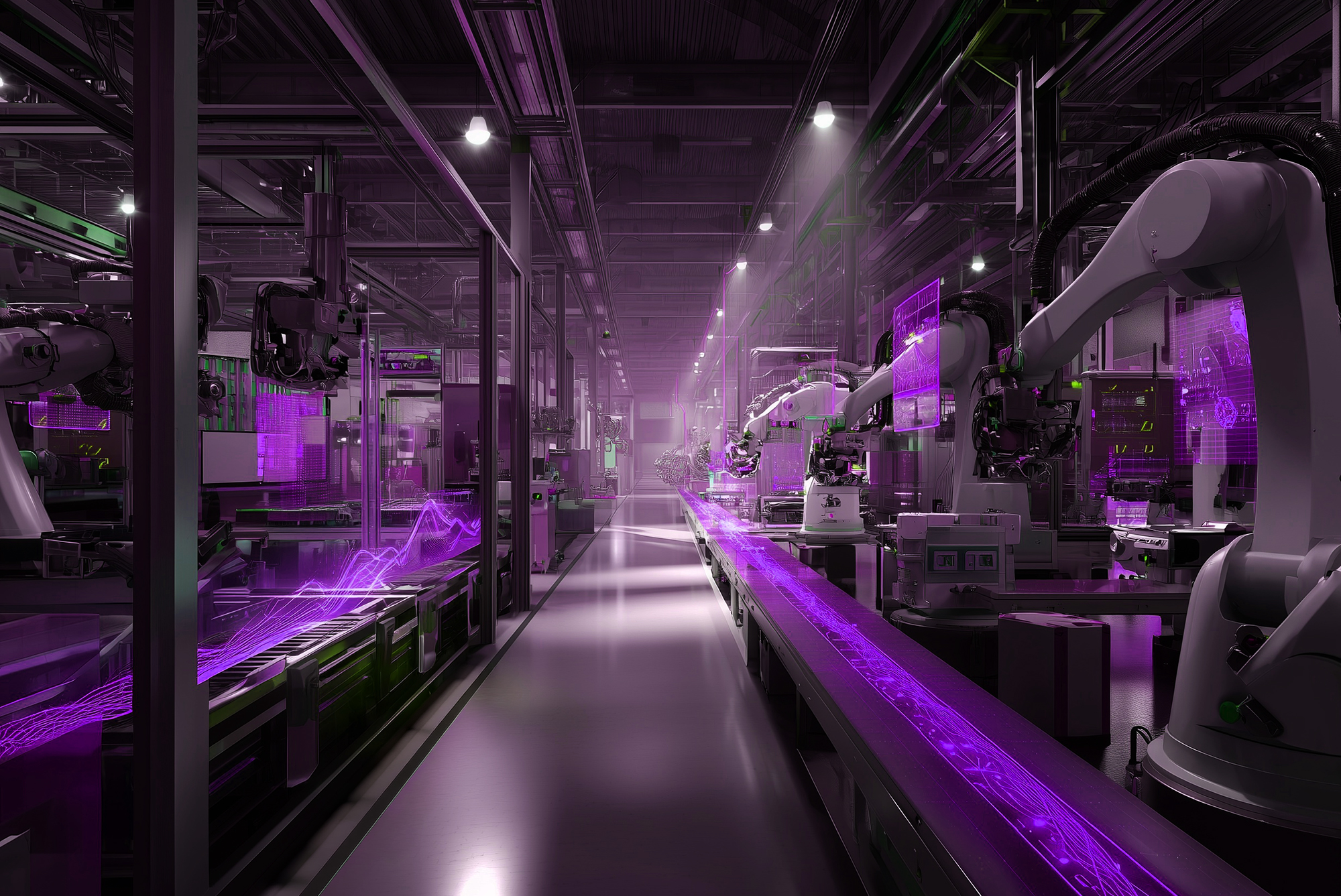
Production assets, operational metrics, and machine telemetry appear together inside a live 3D environment representing the real operation.

When something changes, teams see it immediately.

Instead of navigating multiple dashboards, they can:

• identify emerging issues across production systems
• simulate corrective actions inside the digital twin
• validate outcomes before implementing changes on the floor

This transforms operational visibility from retrospective reporting into predictive decision-making.
Chris Corteen
Strategic Advisor

Chris Corteen brings more than 30 years of experience spanning marketing leadership, product innovation, and the practical application of emerging technologies across enterprise and startup environments.

In his advisory role with SurrealXP, Chris provides high-level strategic guidance informed by his broad industry perspective, helping the company think critically about market dynamics, adoption patterns, and long-term opportunity areas within emerging technology ecosystems. His involvement is strictly non-operational and non-commercial, and does not include client engagement, sales activity, or access to confidential or proprietary information. Chris currently serves within KPMG’s Enterprise Innovation organization, where he focuses on helping large organizations understand and navigate technological change. His advisory contributions to SurrealXP are based solely on public-domain knowledge, professional experience, and independent insight, and do not overlap with or represent KPMG, its clients, or its intellectual property.

Throughout his career, Chris has worked with early-stage companies exploring social, immersive, and next-generation digital technologies. His passion for helping teams sharpen their thinking, avoid common pitfalls, and build durable innovation strategies makes him a valued sounding board as SurrealXP continues to evolve and expand.

Jayant Chaudhary
Chief Technology Officer

Jayant Chaudhary is an accomplished technology executive with more than three decades of experience architecting complex software systems, leading global engineering teams, and driving digital transformation across Fortune 100 enterprises. As Chief Technology Officer at SurrealXP, Jayant leads the platform’s technical vision — overseeing system architecture, real-time data pipelines, enterprise-grade integrations, and the engineering strategy behind SurrealXP’s spatial intelligence platform.

Throughout his career, Jayant has managed large technology organizations across multiple continents, delivering mission-critical platforms for industries including finance, telecommunications, retail, and enterprise software. He has led engineering teams numbering in the thousands, built high-availability systems supporting millions of users, and consistently delivered large-scale modernization programs under aggressive timelines.

Jayant’s expertise includes multi-cloud architecture, Omniverse and 3D system integration, advanced analytics, scalable API ecosystems, and secure data processing frameworks. He has a strong track record of transforming complex, distributed IT environments into streamlined, high-performance technology ecosystems that accelerate business outcomes.

At SurrealXP, Jayant is responsible for the technical foundation that powers the platform — from low-latency data synchronization and Omniverse-native visualization layers to seamless integration with Power BI, Fabric, SAP, Snowflake, and Azure. His leadership ensures SurrealXP delivers a stable, scalable, and enterprise-ready solution that organizations can deploy quickly without requiring internal development resources.

Widely known for his ability to simplify complexity and build high-performing engineering cultures, Jayant drives SurrealXP’s mission to make real-time spatial intelligence accessible, reliable, and operational for organizations of all sizes.

Russell Moore
Strategic Advisor

Technology strategist and AI executive with deep expertise in enterprise data, GenAI, and digital transformation. Russell guides SurrealXP’s long-range product vision and platform strategy.

Russell Moore is a seasoned data, technology, and innovation executive with more than two decades of experience leading enterprise AI strategy, data monetization initiatives, and large-scale digital transformation efforts. His background spans financial services, AI/ML, spatial computing, and real-time data infrastructure — making him uniquely positioned to guide SurrealXP’s long-term strategic direction.

Russell’s career includes high-impact executive leadership roles across Fortune 500 environments. Most recently, he served as Head of Corporate Strategy and Development at Global Payments, where he built and led the company’s Generative AI Center of Excellence across a 6,000-developer organization. In that role, he established enterprise-wide AI frameworks, chaired industry committees, and accelerated innovation initiatives across fintech, payments, and data-driven services.

Prior to that, Russell spent nearly a decade at TSYS, spearheading innovation for the company’s largest clients. He led modernization programs, drove multimillion-dollar technology initiatives, architected new digital capabilities, and built high-performance engineering teams focused on rapid prototyping, automation, and enterprise transformation. His work included pioneering fail-fast development models, compressing development cycles from 18 weeks to just 2, and designing next-generation payment and security technologies.

Russell is also a serial founder and technologist with deep expertise in AI memory systems, semantic infrastructure, distributed cognition, blockchain frameworks, and real-time system design. His entrepreneurial ventures include innovations in AI memory architectures (Memory Box, Amotivv), distributed ledger technologies (Blockwyre), and cross-platform data systems used across financial institutions and emerging tech environments.

A servant-leader at his core, Russell combines vision-driven strategy with hands-on implementation. His leadership philosophy emphasizes empowering teams, building scalable architectures, and delivering practical, high-value innovation — not just theoretical possibility. He has also served as Chair of the Electronic Transactions Association AI Committee, helping define industry standards for responsible AI adoption.

At SurrealXP, Russell leads corporate strategy, platform evolution, and innovation partnerships, guiding the company’s mission to bring spatial intelligence and real-time operational clarity to organizations worldwide.

Josh Rush
Founder & CEO

Immersive-tech leader and former Surreal Events CEO. Josh advises SurrealXP on product direction, customer experience, and enterprise adoption.

Josh Rush is an experienced technology and brand executive with a proven track record of building category-defining immersive platforms for enterprise clients. As Co-Founder and former CEO of Surreal Events, Josh helped pioneer one of the industry’s earliest large-scale, cloud-delivered virtual event and 3D experience platforms. Under his leadership, Surreal Events delivered groundbreaking digital environments for global enterprises, major entertainment brands, and Fortune 100 organizations seeking new ways to collaborate, engage, and innovate.

With deep expertise at the intersection of immersive technology, experiential design, and enterprise adoption strategy, Josh has spent his career helping organizations translate emerging technology into real business value. He has led teams across marketing, product development, client strategy, and platform innovation — consistently shaping solutions that blend creativity with technical execution.

Josh brings that same vision and experience to SurrealXP. As CEO, he provides guidance on product direction, customer experience, and market positioning, ensuring that SurrealXP evolves into the leading platform for spatial intelligence and 3D operational analytics. His background in building high-impact virtual environments and delivering polished, intuitive experiences plays a critical role in shaping SurrealXP’s user experience and enterprise rollout strategy.

Driven by a passion for storytelling, technology adoption, and next-generation interaction models, Josh helps guide SurrealXP as it transitions from immersive experiences to immersive intelligence — bringing real-time 3D data visualization to industries that need clarity, speed, and better decision-making.